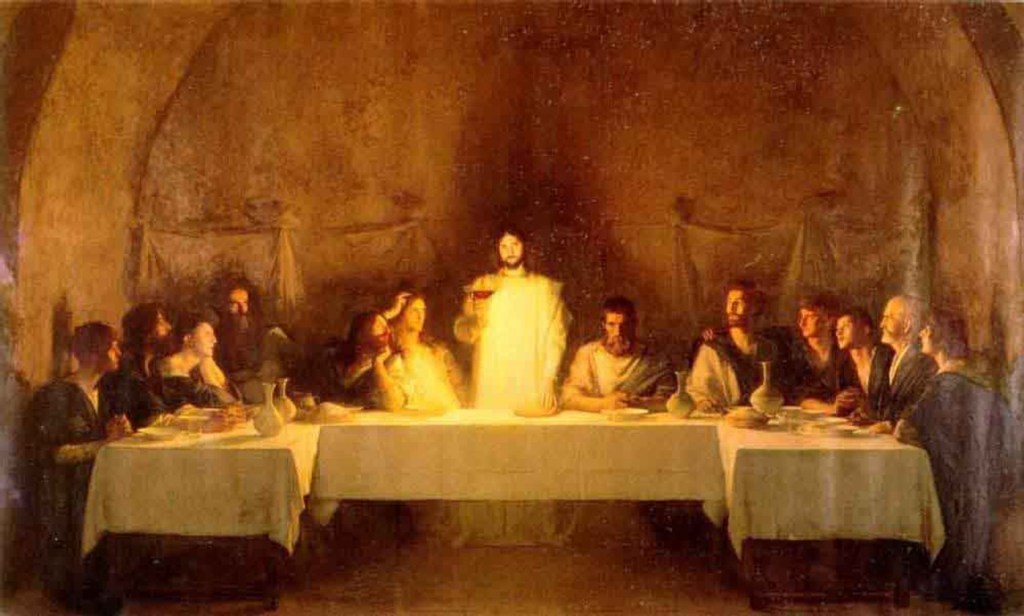
How to Explain Transubstantiation?
We Catholics believe that at every Mass, bread and wine become Jesus — his body, blood, soul and divinity — even though we can’t fully understand how it happens. The miracle of the Eucharist is a mystery, something that human reason and intelligence can never fully grasp.
However, our Catholic faith is a reasonable one, and we can’t simply leave this mystery a complete mystery; we have to do our best to make sense of it, albeit incompletely. This is why transubstantiation is such an important term for us to understand in explaining to others what we believe about the Eucharist. Transubstantiation is a scholastic term that attempts to explain how bread and wine can become the body and blood of the Lord without losing their exterior appearance. In order to understand it we need to understand the medieval concepts of accidents and substance.
Accidents are the exterior, physical parts or qualities of something (like the fingers, hair and feet of a person). Substance is the eternal invisible quality of something (human being). Think of the life of a human person: Our exterior dimensions are in constant flux; we all look much different now than when we were born. What remains unchanged is who we are at our core — a distinct human being. In other words, our accidents change, but our substance remains the same.
With the Eucharist, it’s just the opposite. While the accidents of the bread and wine(taste, texture, appearance) do not change, the substance (the essential “bread-ness” and “wine-ness”) does change. It still looks, feels and tastes like bread and wine, but it has truly become Jesus. This is what the Catholic Church means by transubstantiation. At the end of the day, transubstantiation is a philosophical term used by the church to describe a miracle, the mystery of the Eucharist. Like the apostles, we have faith in the Lord’s words, that he meant what he said; but, also like the apostles, we will never fully understand those words. The conversion of the substance of the Eucharistic elements (bread and wine) into the body and blood of Christ at consecration, only the appearances of bread and wine still remaining.
Want to know more?
Source: Northwest Catholic: By Cal Christiansen, Sep 29, 2016
 Saint Thomas the Apostle Catholic Church